

Afterthoughts: Winter
Reflections on theatre kids, Bebo, and an evening of gossip.

Welcome to Afterthoughts. This is a seasonal interlude where I reflect on some of the Characters so far, and capture other thoughts and theories that might otherwise slip away.
In the Winter issue:
Mackenzie Thomas’ one-woman show
My inner theatre kid
Why we dream of narrative control
I’m Not Like Other Girls, I’m Worse
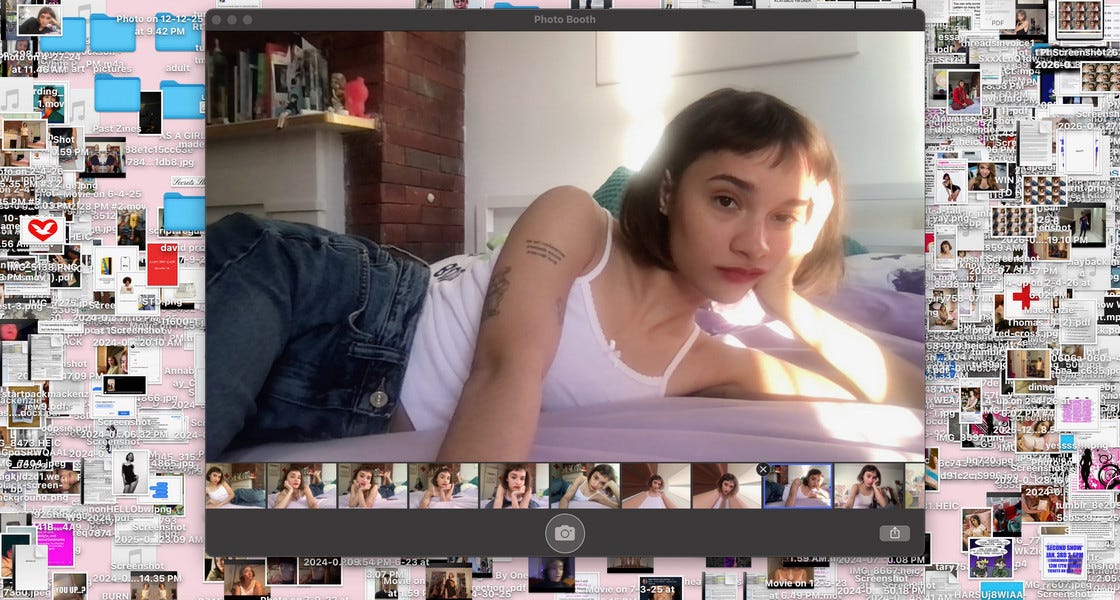
On 13 February 2026, I went to see Mackenzie Thomas’ one-woman show, I Said What I Said.
Readers of my very first post – The Diarist – will remember Mackenzie, whose screwball Lolita runs tirelessly over the internet and streets of Bushwick. You might see her wielding a selfie stick and wearing a babydoll dress, leaning over a pharmacy counter to buy UTI medication, trying to befriend her hacker, or generally having experiences and uploading them before the high has worn off. To put it in TikTok terms, she is like if Anaïs Nin were an eGirl.
You might also remember that Mackenzie went dark around the same time I published The Diarist in August 2025. She marked her hiatus from blogging by admitting that she was ‘feeling more embarrassment and shame’ about writing about herself. I posted about how this felt like the closing of an era, in which the self is no longer an excavation site that we must dig for content.
I continued to watch Mackenzie’s days unfold via her Instagram Stories, but missed the deeper monthly diaries she would usually post on her Substack. Luckily, her hiatus only lasted until October. Then, at the end of the year, her voice became a lot louder again. She was announcing a SURPRISE in NEW YORK on JANUARY 2ND and to HOLD THE DATE. I was not in New York, but continued to hold the date, wondering what she was getting up to.
The answer was more Diarist-coded than even I could have expected: Mackenzie was hosting a four-hour one-woman show in which she would read out every single one of her tweets between January and December 2025. My mouth dropped open. People could do that? And: people would watch that? The answer was yes and yes. It sold out.
Curse of the Theatre Kid
If you hadn’t already guessed it, I used to be a Theatre Kid.
I’d even go so far as to say musical theatre kid, although I couldn’t really sing and I definitely couldn’t dance. But I did subscribe to the musical theatre way of life: melodrama, performance, a touch of fantasy. Give me a stage and captive audience and I could have a lot of fun. Whether or not the audience would agree, I couldn’t say.
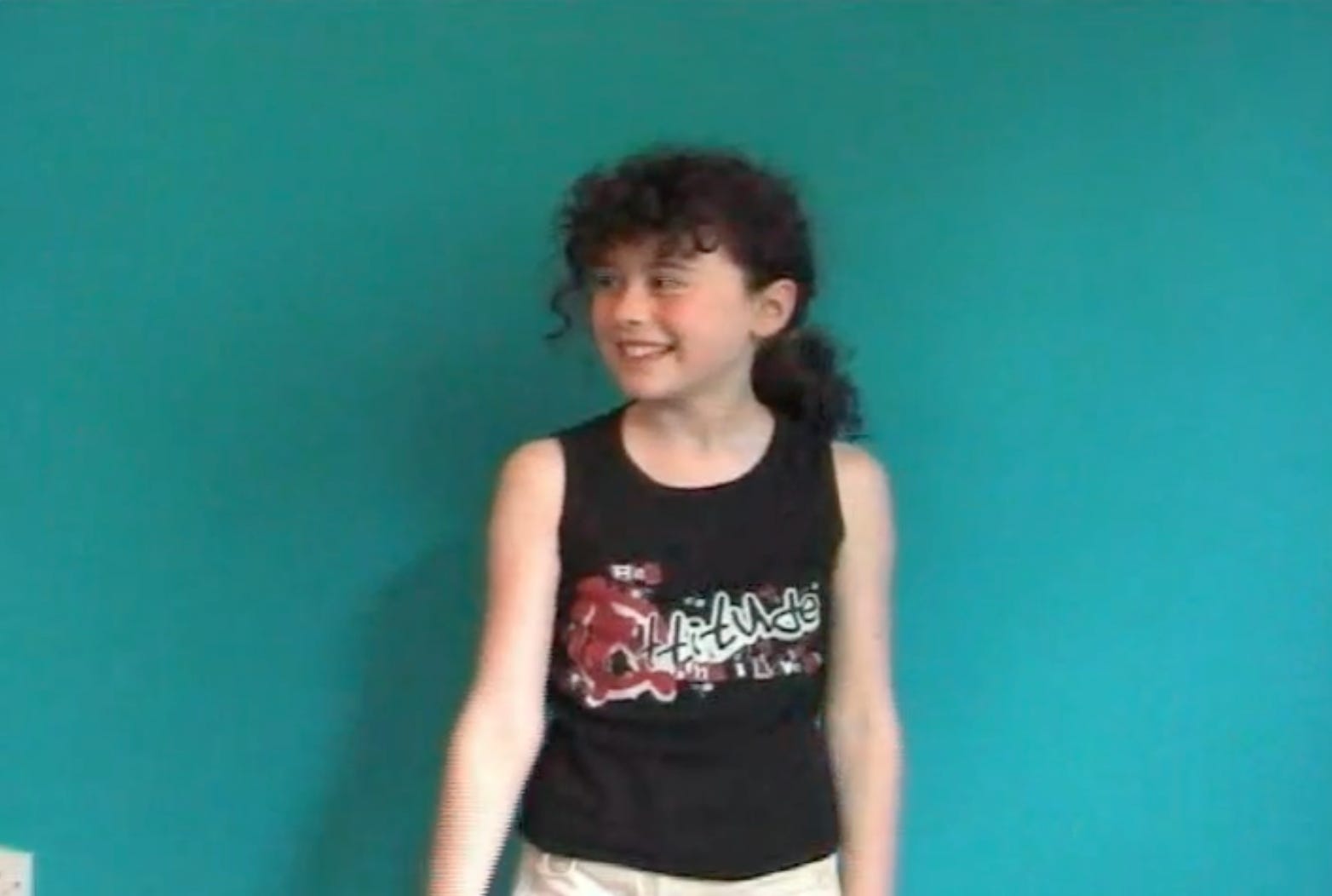
My favourite musicals were Cats, Oliver!, Chicago, Moulin Rouge, The Sound of Music, and Grease, which gives you an idea of what type of insufferable child I was, i.e. the type to put on ‘productions’ and make my parents pay for the privilege. Sometimes I would enlist the help of my neighbours, disaffected boys who had no idea what was going on (I was an only child until age 7, after which I had a half-brother, so I still had one whole parent for whom I was the star of the show).
As soon as I was old enough, I joined youth theatre groups and performed in pantomimes, working my way up from chorus rodent to Snow White. I sent an audition tape to Stars In Your Eyes Kids (as Kylie Minogue????) and cried my eyes out when I discovered I was too young to be considered for the role of Hermione in the UK-wide Harry Potter auditions.
When social media happened, I was obviously getting involved. I joined Bebo and competed in ‘modelling’ and ‘photography’ competitions which applied the concept of America’s Next Top Model to bored regional teenagers.
This sounds dodgy, but I swear it wasn’t – there was no showing skin nor money exchanged. Instead, each week we were given a theme (‘fairytales gone wrong’ comes to mind) and given the rest of the week to run around a forest with a DSLR and our friends, then mess around on an illegally downloaded version of Photoshop on the shared computer, then, minutes before the deadline, excitedly upload our entry.
The following day, whoever ‘ran’ the ‘competition’ would then announce the ‘winner’. What did we win? Nothing, apart from misguided hope in our ascending stardom.
Side note: I have no doubt in my mind that Nadia Lee Cohen was a Bebo girl. Her entire shtick (photographer + model + micro-celebrity + Essex girl done good + total weirdo + friend to the Kardashians) is dripping in Bebo lore. I’ll do a post about her at some point.
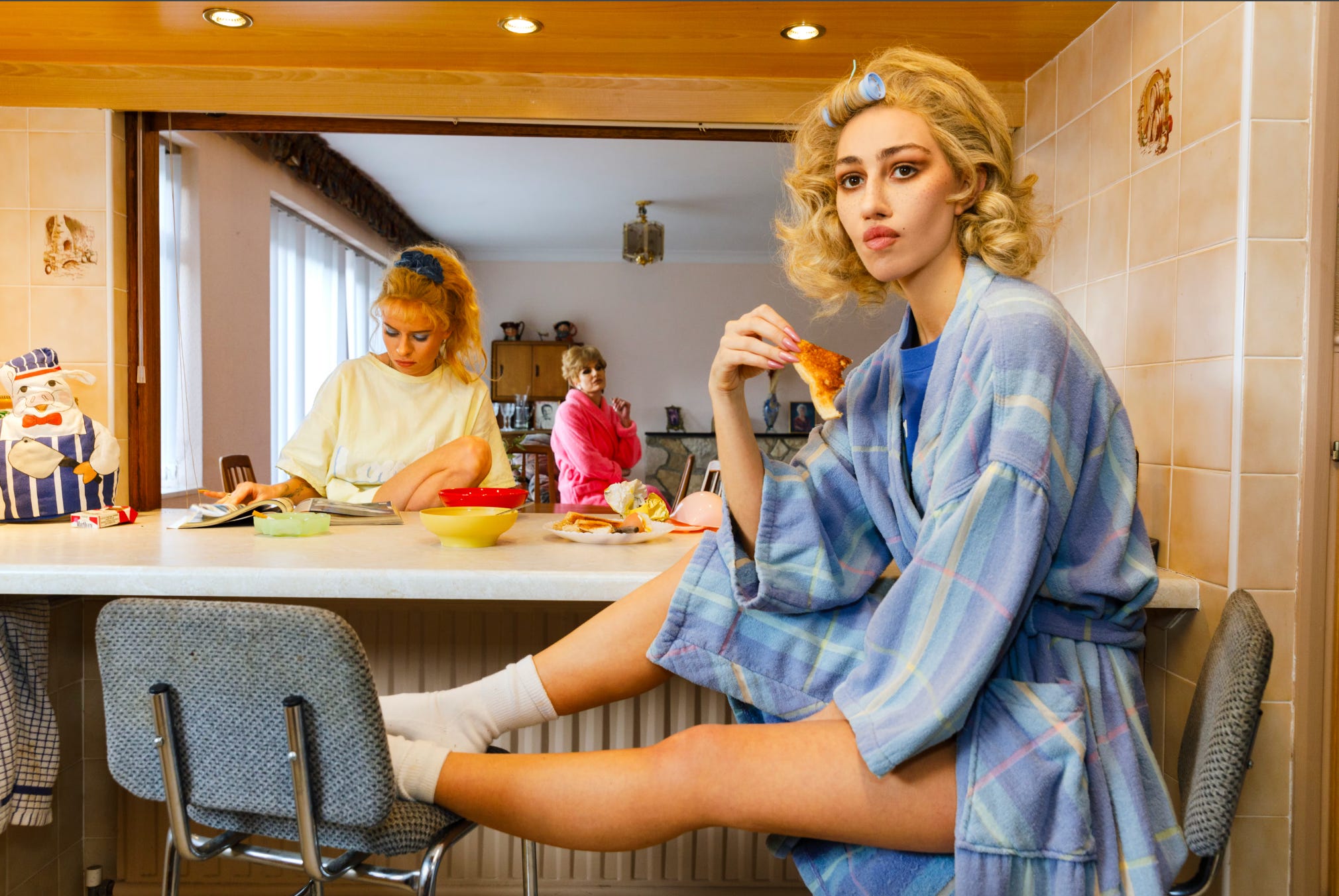
You might think I grew out of my performance era when I hit puberty, and you’d be wrong. In fact, this was a turning point for me. I discovered I could actually turn my passion into good grades. I took Art, Media Studies, Drama – anything that would allow me to benefit from my pressing desire to control and distort my image.
It was around this time I came across the fashion industry. It appeared to me, a sixteen-year-old girl from a Northern English market town, to be the centre of the universe. Fashion took place in big, important cities and sat at the intersection of all the other things I liked: photography, theatre, beauty, literature, film. It solved a problem. I didn’t need to choose one of these things, I could just choose fashion.
I didn’t care too much about clothes, but, in 2010, fashion wasn’t really about clothes. The models in my favourite magazine, Katie Grand’s LOVE, were usually naked, or nearly naked, or kissing each other, or tied up underwater. No, fashion wasn’t about clothes. It was, in retrospect, about sex.


Of course, when I did finally get to the big, important city of London to study fashion, I realised that it wasn’t really about sex, and it was unfortunately about clothes.
Nor would there be good grades for donning a trilby to run around an abandoned building with a camera to get the cover image for your pretend magazine called ‘DEFY’. And there wouldn’t be a lot of sex either. Instead, there would be rails of clothes, spreadsheets, and lots and lots of emails.
Still, I got swept up in it all: the clothes, the coolness, and sadly the emails. The desire to perform and play that had been the rocket fuel for my childhood and adolescence was no longer needed; I drank coffee now. It was London, or the internet, or a combination of the two, that had stamped it out of me.
My theatre kid still pops up. The moments when I notice it rear its head are when I’m doing a work presentation or singing karaoke: activities that are considered very different from one another (one formal, daytime, sober; the other causal, nighttime, not sober) but really are the same.
Whether I’m presenting a deck on the Gen Z workplace or rap-singing my way through Can’t Stop by the Red Hot Chilli Peppers, I have two things: a stage and a captive audience. For forty-five or three-and-a-half minutes, I am the performer, and everyone’s eyes are on me. I feel alive. I feel, in a weird way, myself.


Losing the plot
I thought I’d missed out on Mackenzie’s one-woman show. After selling out several dates in New York, she took it to Los Angeles, and it was only after seeing the positive reviews that I realised I could have flown to New York to see it. That it could have been a business expense, some interactive Recurring Character fieldwork.
Luckily, she ended up coming to me. The smart women at Polyester magazine also had their eyes on Mackenzie’s ascending star, and booked her for a London show on 13 February. I bought my ticket instantly.
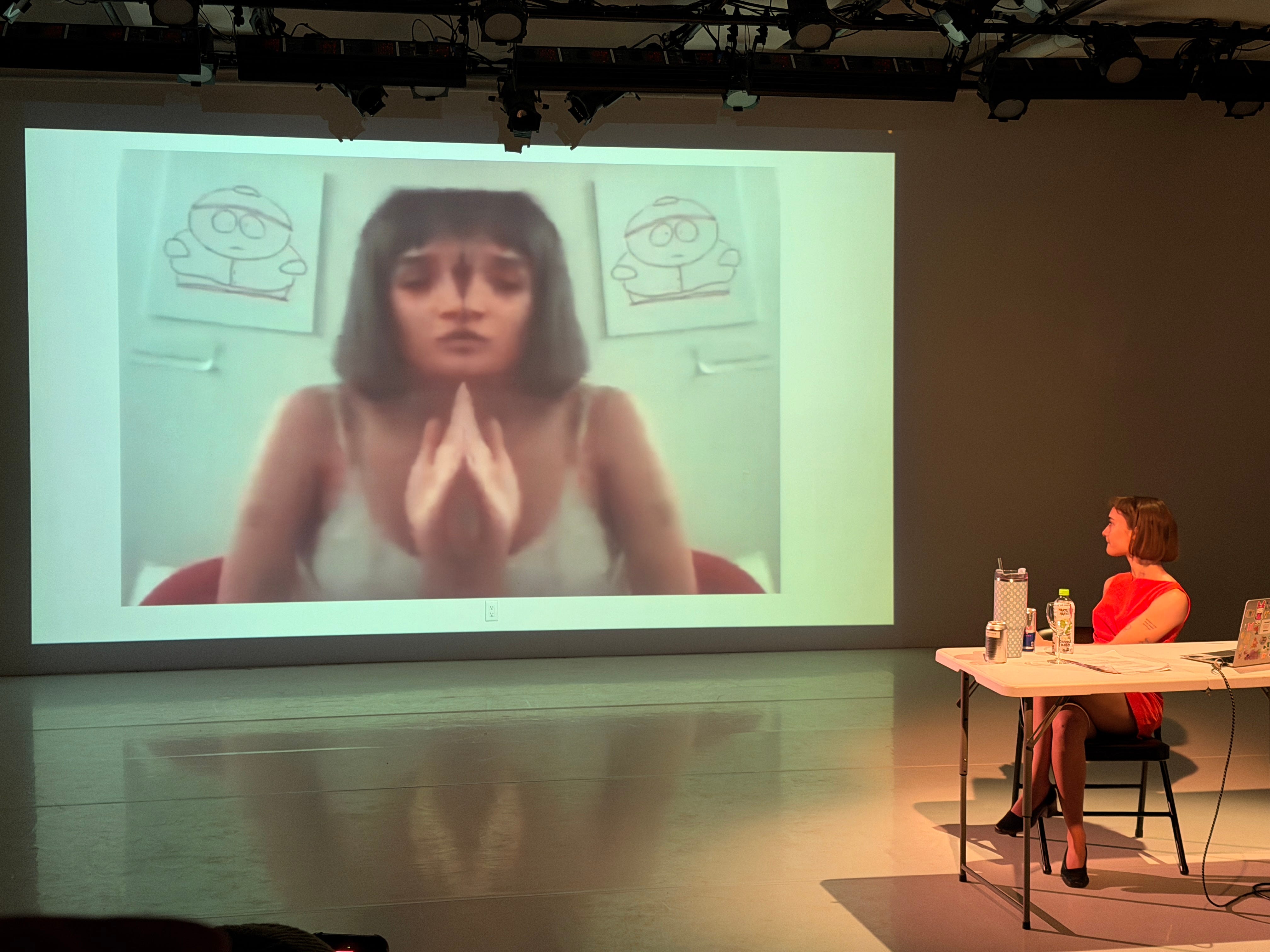
I Said What I Said was structured by month. Each month began with an opening essay, followed by every single one of her tweets (including retweets and meme captions and videos watched in their entirety; this was a defiantly no-skip zone).
I took a toilet break during the month of May, and discovered that motivating myself to leave my seat was a challenge. Mackenzie had stumbled upon a completely addictive formula: a sort of collective live social media experience.
The reason the four hours fly by is the same reason time you disappear into the vortex of your phone; when you look down to check a reel someone sent you, then look up again and it’s midnight. Plus, there were plenty more delicious things. Dancing. Memes. Dresses. Soul music. Gossip.
At the beginning of last year, in my light monitoring of Mackenzie’s social media, I became aware that she had broken up with her boyfriend. Matt Starr is a poet, the founder of Dream Baby Press, and, lol, the creative lead at Substack. It’s no wonder Mackenzie stopped posting her diary entries on the very platform that her ex-boyfriend ran.1
Before seeing the show, I half-expected Mackenzie to have retired her Diarist persona altogether, especially since she had been feeling ‘shame’ for talking about herself so candidly. Perhaps, I thought, she had become a performance artist or comedian instead.
Winter is preventing me from being young.
– @evilmackenzie
But as I sat there on 13 February, I watched as Mackenzie dialed up her Diarist to eleven. ‘This is a show about honesty, myself, and how I feel,’ she began. I quickly realised I wasn’t only about to get the full dispatch on her breakup, it would be my entire evening of entertainment.
Let’s remind ourselves of something: a few weeks before, Mackenzie had performed this same show in Brooklyn, to an audience of people who probably knew her ex-boyfriend. This still blows my mind. Imagine booking out EartH just to tell the girlies everything? Imagine selling it out?
It’s all very Taylor Swift, another theatre kid in recovery. Although Swift loves to tell us she’s an ‘English teacher’ (her engagement post still makes me feel sick) she is fooling nobody. Swift is a thespian at heart. The Eras Tour was nothing if not a large-scale West End show. Taylor Swift doesn’t make music to listen to so much as to perform to. That’s why her songs are so powerful to sing in the car, or, for those who don’t drive, lip-sync on a walk home after two glasses of wine.


Like Diarists, I also capture moments as they happen, but it wouldn’t occur to me to share such intimate writing. I am all too aware of just how wrapped up in emotions I still am that I cannot even begin to know whether it is good or bad writing; nor can I imagine how others would perceive it.
And perceiving, as every good theatre kid knows, is the most important thing of all. What we want more than a stage and an audience is narrative control. Allowing someone to watch as my yarn is unfurling, to watch as I lose narrative control, is a terrifying prospect.
Mackenzie turned her unfurling yarn into art. She left nothing to the imagination, and invited an audience to be voyeurs as she lost herself, in real time, somewhere between the months of March and May. Although wildly different in subject to my own life between these months, it’s somewhat nice to know that Mackenzie and I were going through something in the same timeline.
I’m not going to do a four-hour one-woman show anytime soon, and I don’t have plans to publish any of my more personal writing either. But I Said What I Said reminded me that it is possible to do something absolutely insane, the type of self-centred production only a child would dare to do, and even they would only charge their parents £1 to watch it.
Mackenzie reminded me that claiming a stage as an adult does not need to limited to karaoke or Keynote; it can be a form of art, or play, or a radical new entertainment format, or just a fun evening out. And a very good one at that.
Editor’s note: Mackenzie says this was unrelated, and makes the valid point that she is a better writer than him.
Cryinggggg