

Character #5: The New Beginner (Part I)
The so-called crisis of starting again.

As we reach the end of the year, something always happens. We start talking about our next act. The changes we’ll make, the breakfasts we’ll eat, the new coat we’ll buy. All leading, of course, to the (truer) selves we’ll become on January 1st.
It seems like the perfect moment to write about a Character that’s been on my mind for a while. Let me introduce:
The New Beginner
Also known as: the Late Bloomer, the Divorcee, the Second Act
Archetype: Hero
Key setting: A gym, an airplane, or a quiet beach. Reinvention requires alone time, a playlist, and a pensive expression.
Paths not taken
The New Beginner began, aptly, as something else. It was a sub-trope of the Eternal Adolescent. I had planned to track what happens when the whimsical, indecisive Character reaches – gasp! – middle age. But when I tried to write it, I had second thoughts, and couldn’t explain why.
Then, two weeks after pressing publish, along came a study by the University of Cambridge, announcing the discovery of five distinct life stages. Adolescence, according to this new framework, now lasts from nine to 32. It’s ironic and beautiful that in just two weeks I would turn 32, taking me into the next stage: adulthood.
While puberty offers a clear start, the end of adolescence is much harder to pin down scientifically. Based purely on neural architecture, we found that adolescent-like changes in brain structure end around the early thirties.
– University of Cambridge, 2025
The study made me realise the New Beginner wasn’t an older version of the Eternal Adolescent, but something else entirely.
Unlike the Adolescent, whose life is a state of perpetual indecision, the New Beginner has chosen their path. In society’s eyes, adulthood has been ‘completed’: with a marriage, a child, a career, a creative practice; sometimes all of the above.
But, in their own eyes, there’s something missing. There’s dissatisfaction with their choice. Maybe regret. Maybe even imprisonment. Cue the opening bars of a bouncy, upbeat soundtrack, and the sudden desire to just… start over again.
Here, you might be thinking: wait, doesn’t this phenomenon have a name already, and isn’t that name the Midlife Crisis? And yes, in many ways it is.
I’m both endeared and repulsed by the term ‘crisis’. In many ways I’m indebted to it: working in trends, I’m writing the word on a daily basis. Never underestimate the power of a crisis. It does a lot of contextual legwork. You can talk about the loneliness crisis, cost-of-living crisis, healthcare crisis, climate crisis, masculinity in crisis, and you barely need to say anything else. People think: yes, a crisis! And then you move on.
Perhaps because of this, a crisis has struck me as a bad thing. Something to be avoided, to be solved (in trends: with an innovation, activation or a campaign; outside of trends: with funding, visibility, or a campaign.) But I’d like to unpack, and maybe even dispute, this.
First, let’s cover some groundwork. In Part I, I’ll introduce the New Beginner and their historically masculine archetypes. Then in Part II, I’ll unpack the newer tropes, from the transformative promise of international travel to extramartial affairs you actually root for.
As we go, you’ll notice my sympathy, even my siding with these Characters. This might be because they’re our Heroes; by design we’re supposed to side with them. But there’s a personal bias here too – I gravitate towards curiosity over comfort. I am more likely to encourage action that is disruptive and risky than safe and comfortable. Change, I think, is to be embraced. Surprise is a net good. I could blame digital technology or surveillance capitalism for the decline of surprise (the surprise crisis?) but that’s what I do for work, and I’m not here for work. I’m here to have some fun.
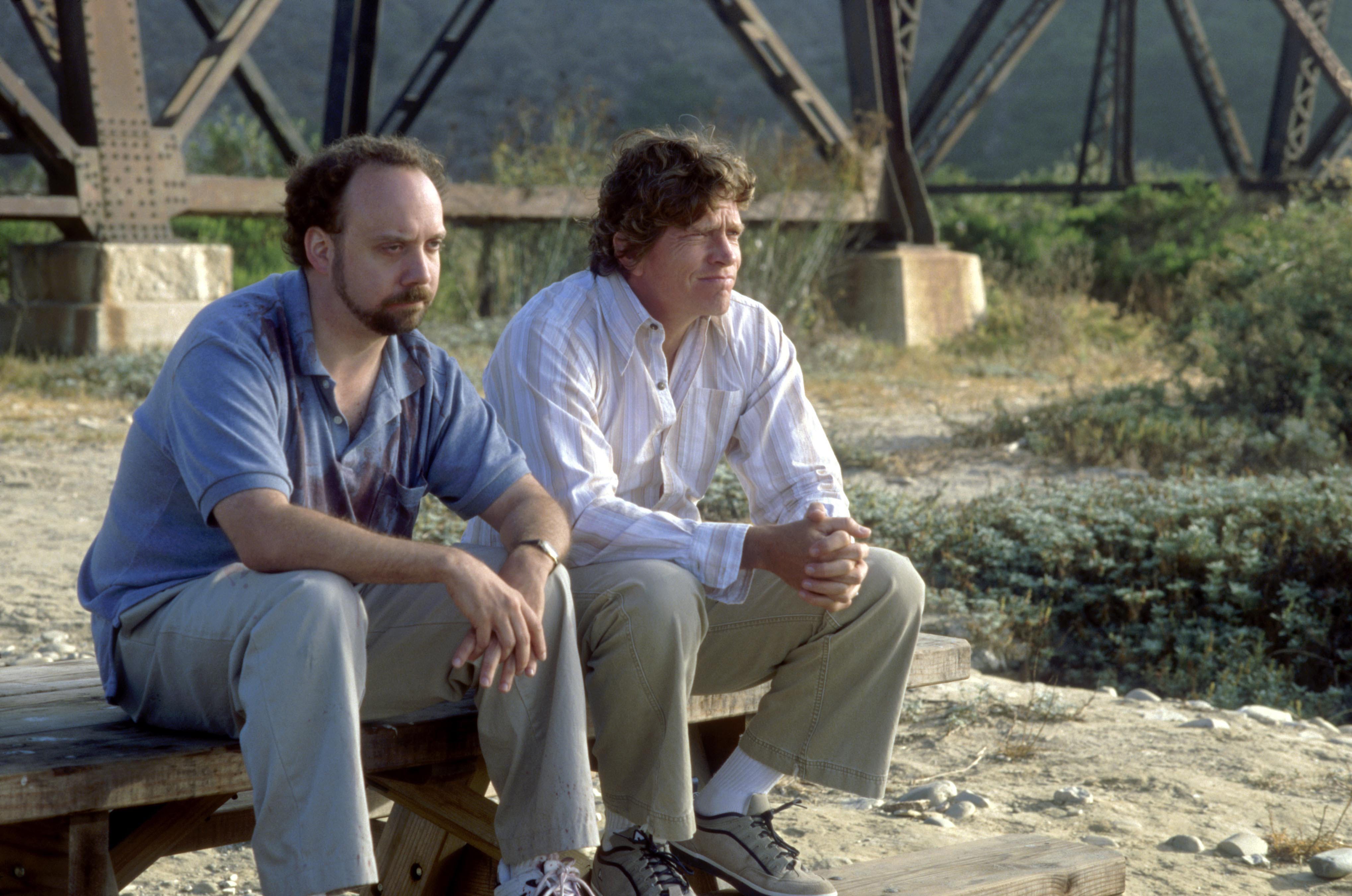
So, when did I become interested in this Character? When did my preoccupation with the dissatisfied and reawakened begin? Oddly enough, it began well before I turned an adult at all. In fact, I was sixteen; I was at school. And I had just watched a film called American Beauty.
Sports cars
There is a version of the midlife crisis we all recognise instantly.
It involves someone – usually a man – who buys an expensive sports car. Who gets his ear pierced or bleaches his hair or gets a tattoo. Who finds a younger mistress and takes up lifting or DJing. Who wakes up one day questioning his vitality and virility and goes to look for these things at Burning Man.
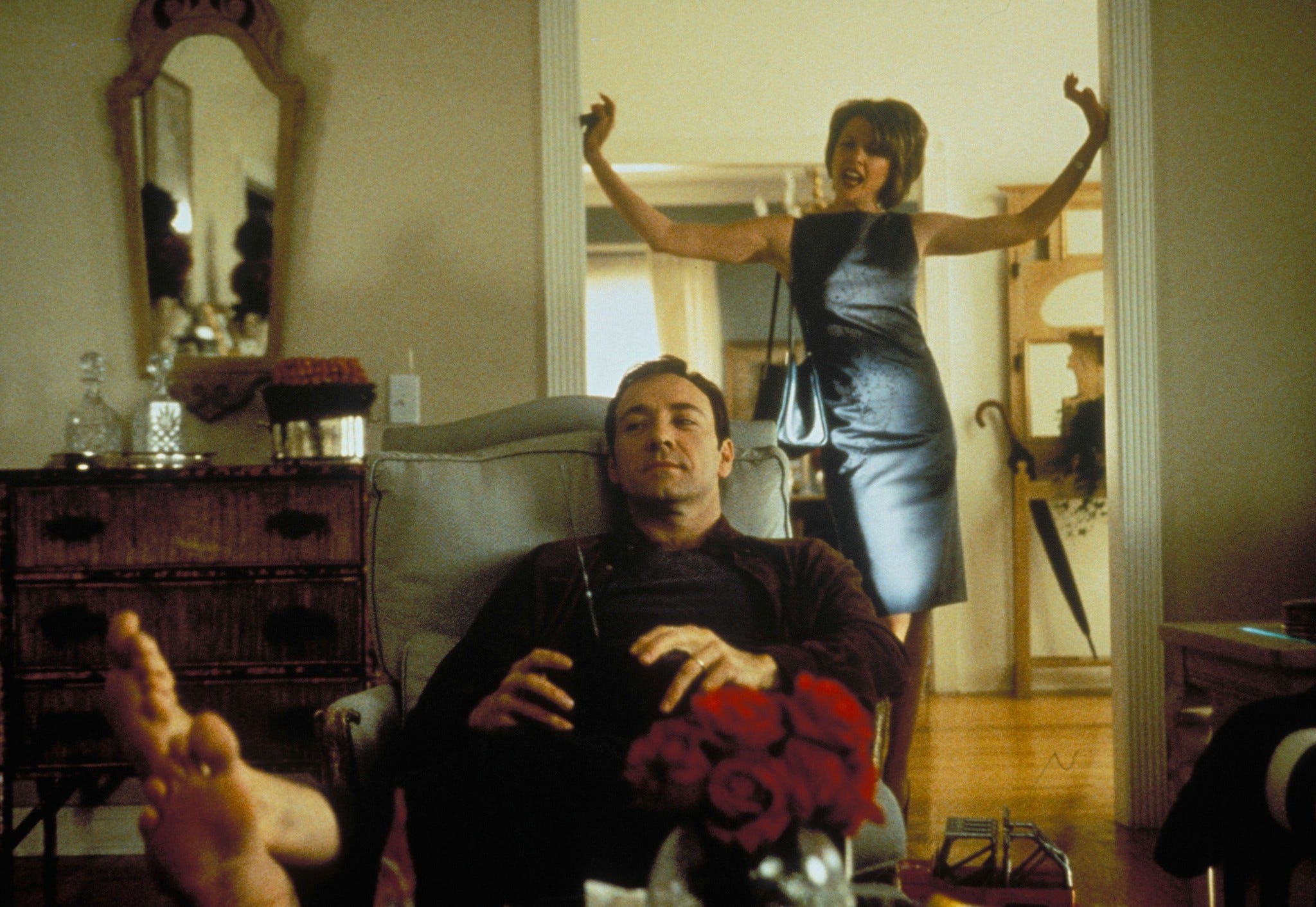
It’s funny how quickly these things come to you; how entrenched the midlife male experience is on our cultural consciousness. It’s also funny how I’ve borrowed most of these attributes from the 1999 film American Beauty.
I can’t quite emphasise how much I loved American Beauty. In retrospect, my parents must have found it strange when their teenage daughter’s favourite film was about a middle-aged man rebelling against polite society, who stopped to watch dancing plastic bags, and named Sam Mendes as her favourite director.
Now, it makes sense why I liked it so much. It’s a film about bad people, lust, consumerism, boredom, the trap of perfection, ugly friendships and horrible families, and, of course, it’s about beauty.
It’s a great thing when you realise you still have the ability to surprise yourself. It makes you wonder what else you can do that you’ve forgotten about.
– Lester Burnham, American Beauty (1999)
I hesitated to rewatch American Beauty at the now-officially-adult age of 32. Part of me was worried its sexual subplot would be muddied by the downfall of Kevin Spacey, but mostly I was worried it would be a bad movie.
I didn’t need to worry. To be honest, I didn’t even need to rewatch it. As soon as its opening shot began to track across its all-American suburbia, I realised I knew every single beat. In fact, I probably could have reenacted the whole thing, like the play it most definitely is.
On my rewatch, I was most surprised by how camp it was. First, there’s Spacey’s sarcastic, bitchy Lester Burnham, using his voice and body in ways more akin to a sitcom than an Oscar-winning film. It’s a domestic farce, and every one of the cast is contributing to its satire, whether it’s Annette Bening’s Carolyn sobbing her eyes out at her failed open house, or Wes Bentley’s dead-eyed local weirdo, Ricky, selling drugs and secretly filming his neighbours.
No wonder I loved it so much as a teen: it’s basically a teen movie for adults.
Then there’s the soundtrack. I’m not usually one to comment on music, but the tinkling of the opening sequence does something to me on a physiological level. It makes me feel like I’m Lester, living the last day of his life, waking up in his beautiful home and looking at his family and criticising them, then criticising himself, and then criticising them again.
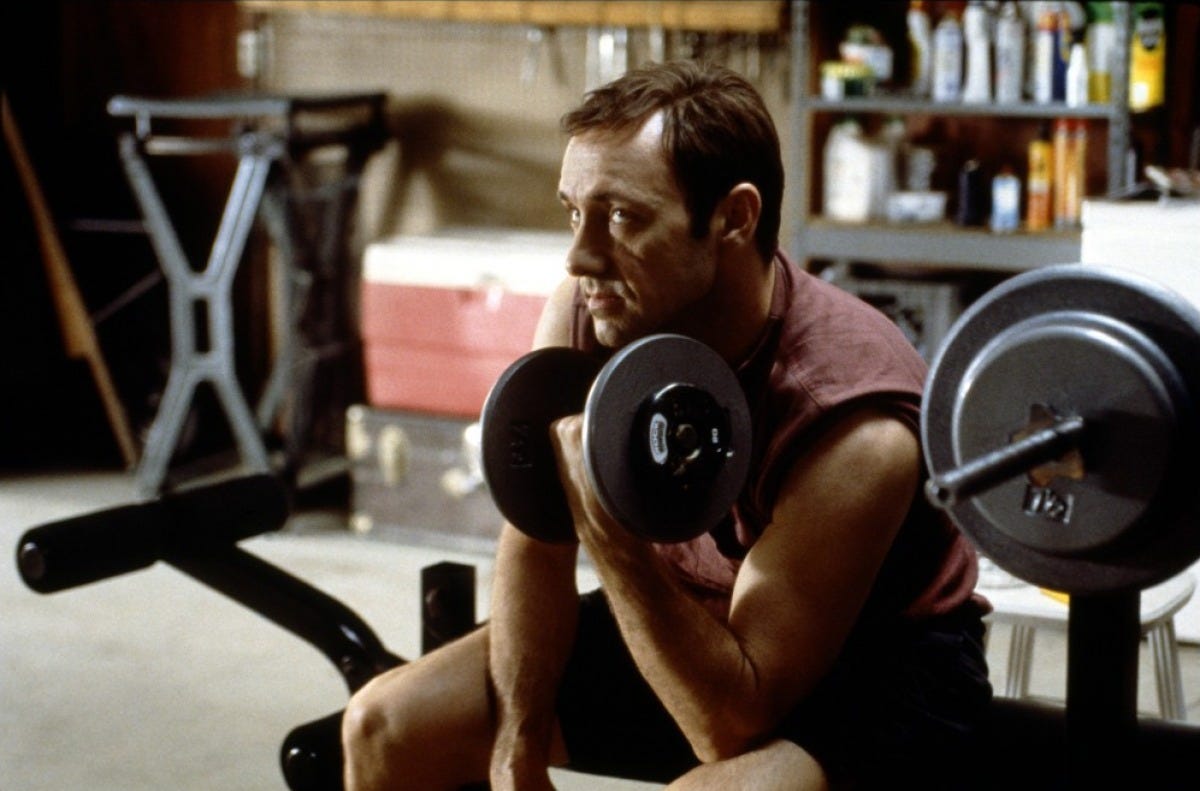
I can’t say how exactly this film shaped my idea of adulthood – as something that is fundamentally lacking and boring, at least until you quit your sensible corporate job and spend the day playing video games and getting jacked, developing a (very) inappropriate crush, then taking a job at a fast food chain – but it certainly did.
While Lester’s retreat from the showroom Branded Couple lifestyle represents an undeniably masculine dream (see the video games, sports car and garage-turned-gym), I don’t think I internalised it as entirely masculine.
Instead, it sparked a larger idea in me: one that life isn’t set, that you have the ability to bend time, or at least age; that subscribing to the markers of a midlife crisis will make everyone around you roll their eyes, but that doesn’t mean you can’t do it. There is nothing stopping you. There is always time to start again.
The last hours of summer
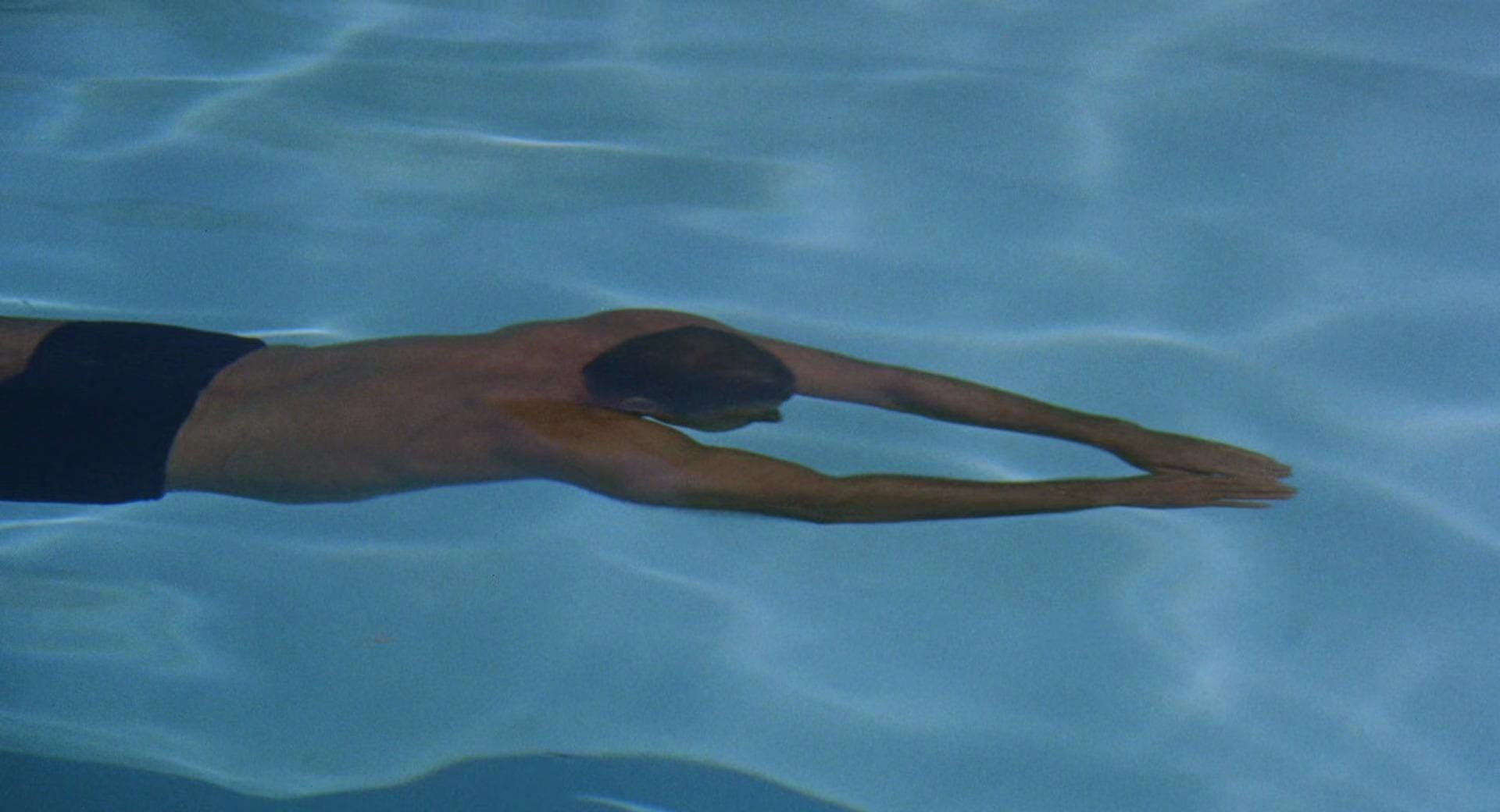
Another classic example of the New Beginner archetype – particularly as it intersects with the Eternal Adolescent – is Neddy Merrill, the ageing yet perennially boyish protagonist of John Cheever’s short story and 1968 film The Swimmer.
The story follows Neddy, who ‘might have been compared to a summer’s day, particularly the last hours of one,’ as he spontaneously attempts to swim across the county, from swimming pool to swimming pool.
What starts as a fun short story about a giddy man with too much energy turns into something much darker. If American Beauty gives us a pastiche of the midlife crisis, The Swimmer turns it into a horror story. I won’t give it away, but you can read it here.
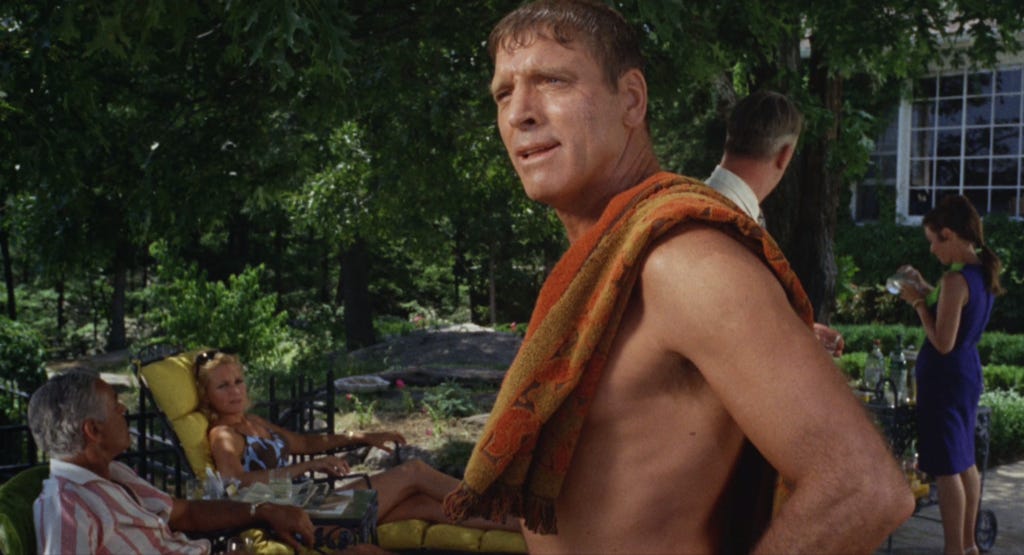
It reminds you that you can go from being in your prime to losing everything, all ‘within the course of an afternoon,’ writes Susan Cheever, his daughter. In September 2025, she reflected on her father’s story – as well as, surprise surprise, his own capacity for country estates and summer antics with blonde women – for Vogue.
Susan writes about her father’s ability to capture ‘the nightmarish quality of ordinary life’ – isn’t this very Lester Burnham? Then she writes this, which I think pinpoints the very place at which the New Beginner and the Eternal Adolescent meet:
My father had a wandering heart, the soul of a renter, and perhaps he knew that no pool he built could rival the neighboring pools, where we all swam as if we owned them.
– Susan Cheever, via Vogue
Is it this sense of rivalry Susan points to – the knowledge that other lives are always shimmering nearby – that helps explain why so many Eternal Adolescents fail to build something of their own: a house, a family, a career? If you can’t be the best, why even bother starting? We could call it Millennial perfectionism, but it’s probably much older than that.
But back to the New Beginner. When I first read the story, I was instantly caught up in its fizzy, sun-drenched excitement. Like most readers, I was charmed by Neddy and his stupid idea to swim from pool to pool, functioning on a mild hangover and one too many Old Fashioneds.
Susan knows this. She finishes the Vogue article by pointing out that, although her father’s story has captured a cult audience, they ‘never, ever talk about the ending.’
The Swimmer isn’t remembered for how it ends, but for what it seems to promise: wet skin, smiling wives, garden parties, the endless sense of summer. We like to think about images of renewal and hope and optimism. We tend not to think so much about the part where it comes crashing down.
Stay tuned for Part II.